

Proven plumbing
The heat-delivery side uses conventional hydronic components installed to Massachusetts plumbing, mechanical, and building codes — nothing experimental between the equipment and the radiator.
No jargon required. Here's the whole loop — how electricity becomes computation, how computation becomes heat, and how that heat ends up warming a public building down the street.
A compact, behind-the-meter computing system draws electricity through the Mansfield Municipal Electric Department. "Behind-the-meter" simply means it sits on the customer side of the utility meter, like any large piece of building equipment.
Like any computer, the equipment converts nearly all the electricity it uses into heat. Instead of blowing that heat outdoors, the system is immersion-cooled: the components sit in a sealed, non-conductive fluid that carries the heat away as warm liquid.
The warm fluid passes through a heat exchanger — a standard, well-understood piece of equipment — that transfers the heat into a clean water loop without the two fluids ever mixing.
That warm water connects to the building's hydronic heating loop — the same kind of pipes and radiators or air handlers already in place. The building's controls decide when to draw on it.
When the regional power grid is under stress, the system can reduce or pause its computing within seconds. It is a curtailable load — one that gives back capacity exactly when the grid needs it most.
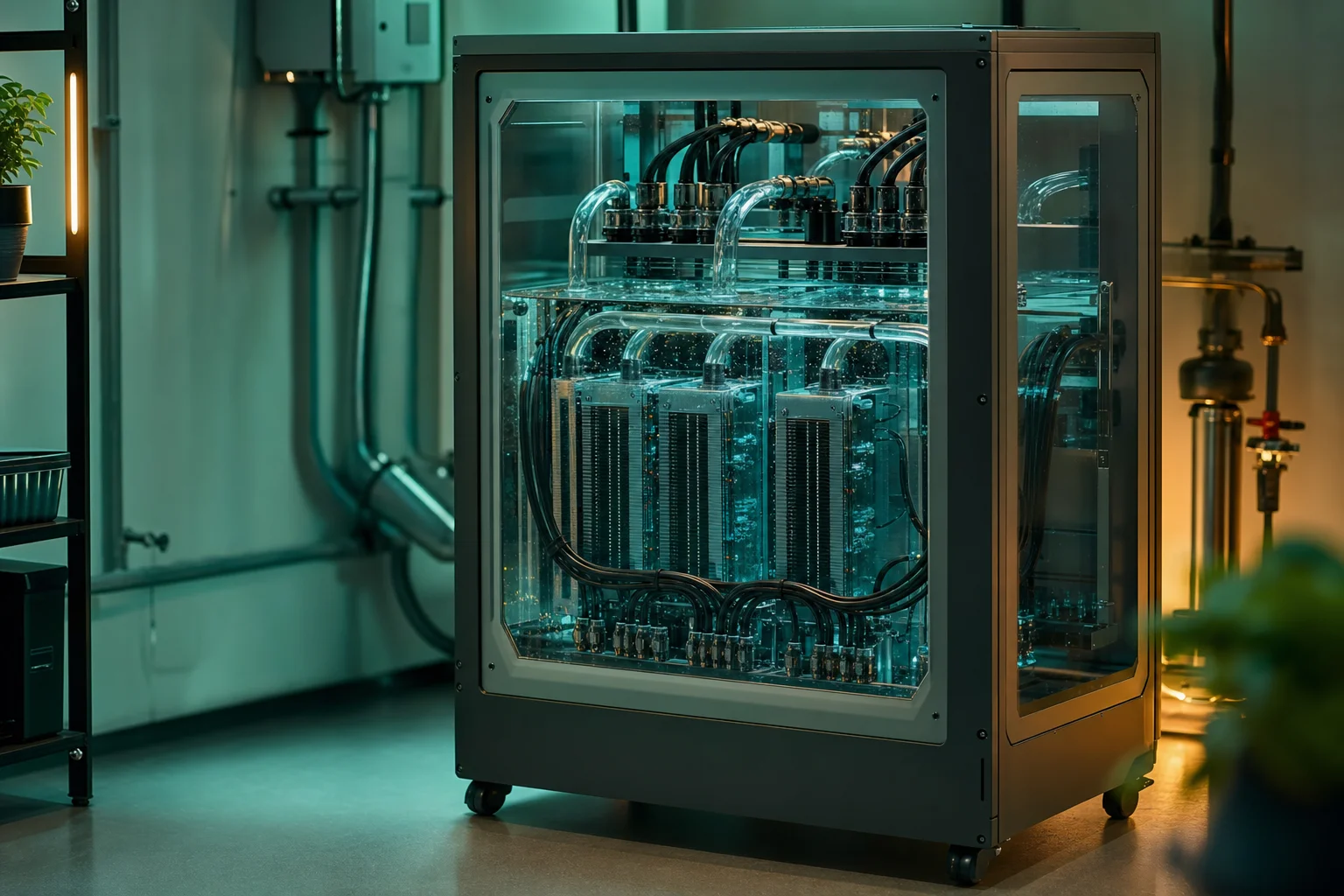
The pilot is sized at under one megawatt: closer in footprint to a building's mechanical room than to a sprawling data campus. The computing equipment is fully enclosed and liquid-cooled, which keeps it quiet and contained.
Because the heat is captured rather than vented, there are no loud cooling towers and no plumes of hot exhaust — just warm water moving through insulated pipes.
Good infrastructure is the kind you never have to think about. Every choice here favors proven equipment, clear ownership, and safe defaults.
The heat-delivery side uses conventional hydronic components installed to Massachusetts plumbing, mechanical, and building codes — nothing experimental between the equipment and the radiator.
The heating source produces no flame and burns no fuel. That means no on-site combustion emissions and a simpler safety profile for the building it serves.
If the computing system is offline, the building's existing heating system continues exactly as it does today. Recovered heat supplements — it never becomes a single point of failure.
A note on scale and intent. In May 2026, Mansfield voted to keep large, power-hungry server facilities out of town — a decision this project shares. What’s described here is different in kind, not just degree: a compact, sealed heating asset, sized to one building’s needs, that uses computing as its fuel and answers to the town’s own boards at every step. Heat is the product. Compute is the means.
We can walk a board, a facilities team, or a curious neighbor through the engineering, the heat output, and the safeguards in plain language.